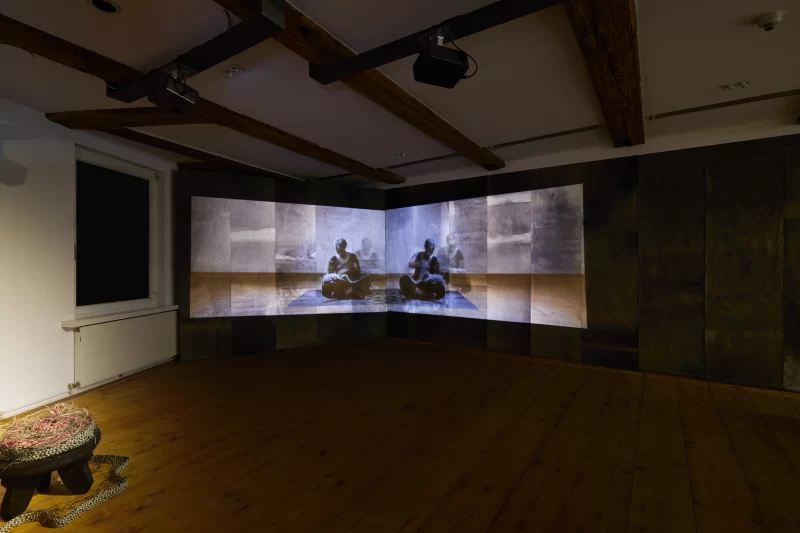
In Where the Ashes Rest, a Single Marigold Bloomed (2025), I return to stories woven through matrilineal memory, captured in ephemeral gestures, and carried by materials that mark both presence and absence. This installation, an expansion of my ongoing engagement with intergenerational transmissions, considers the marigold as a site of remembrance, displacement, and survival, questioning the limits of what can be held and what inevitably seeps beyond the frame of capture.
Where the Ashes Rest, a Single Marigold Bloomed (2025)
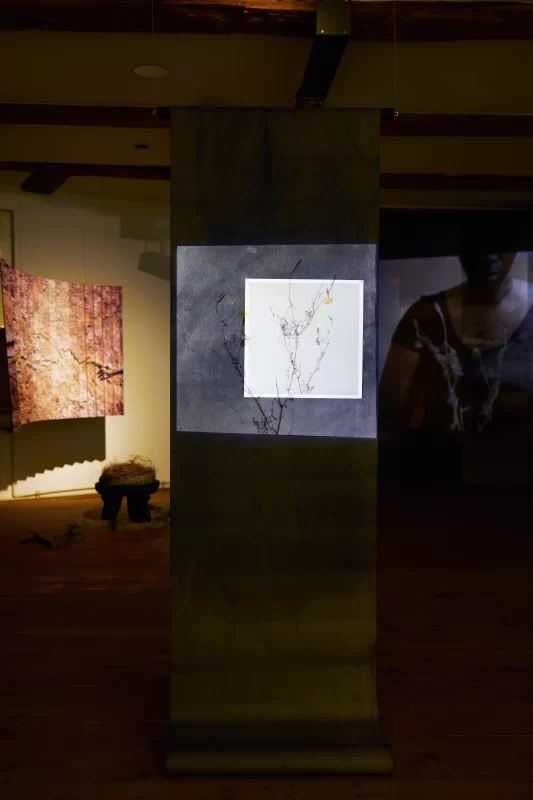
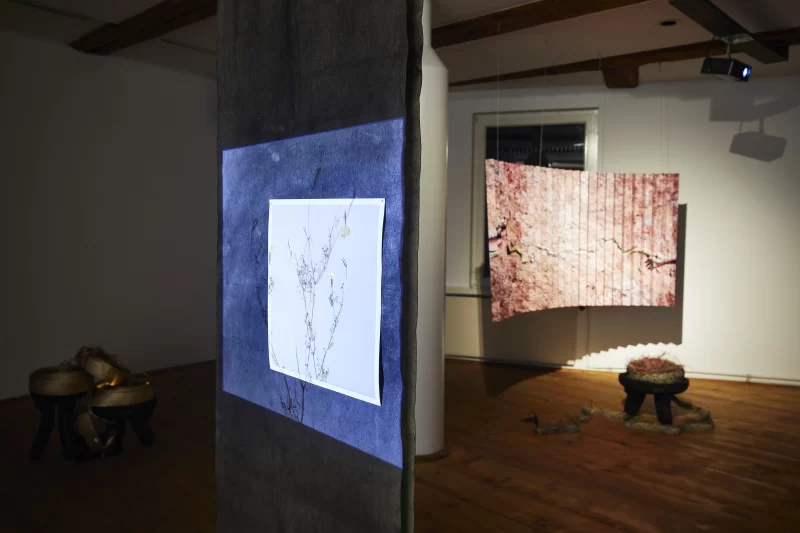
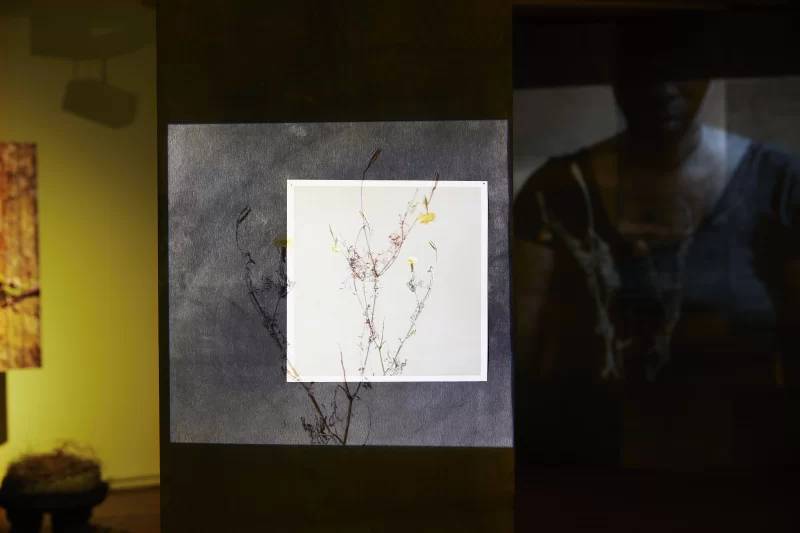
A photograph of a marigold meets the visitor at the start of the installation, its vibrant bloom standing against a withered stem—a tension between decay and renewal. This image of the marigold, however, refuses stasis. Projected onto soot paper, the marigold begins to move, swaying in a looped video overlay, unsettling the boundary between stillness and motion, document and apparition. Here, I interrogate the colonial legacy of the lens—the still photograph as a tool of fixation, the moving image as a suggestion of liberation, and the inherent limitations of both. Movement, I contend, does not always equate to freedom; the loop, like history, can be a site of return as much as repetition.
The marigold, introduced to the Usambara region through colonial botany, has since naturalized, embedding itself within local landscapes and memory. My mother, Demere Kitunga, recalls a single marigold blooming at the burial site of her infant sibling—a spectral persistence, a refusal to be forgotten. This flower, uprooted and replanted by colonial hands, finds continuity not merely through biology but through the rituals and remembrances that claim it anew; tending to the flower… tending to history as one tends to a garden. The marigold, in its capacity to reseed itself, speaks to the persistence of memory, sprouting in unexpected places and persisting despite disruption.
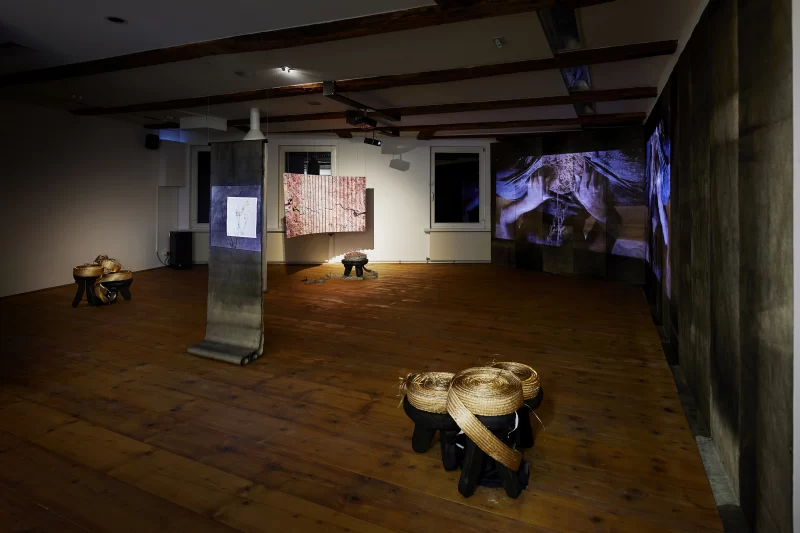
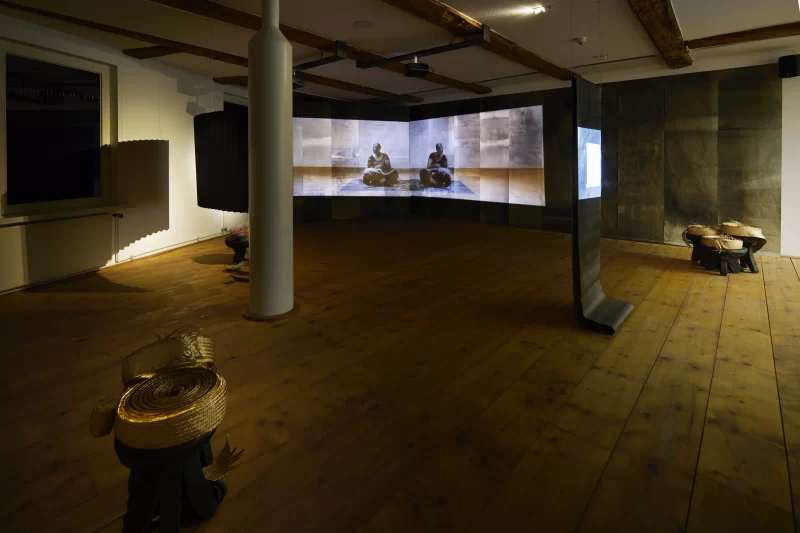
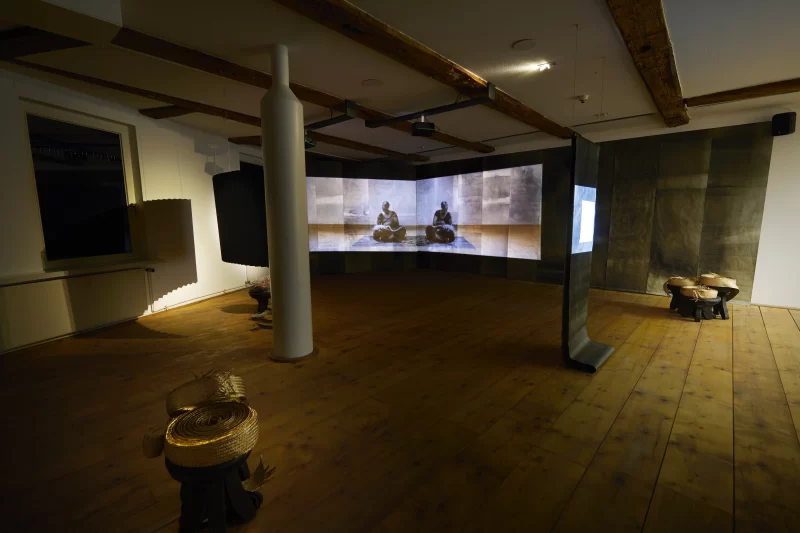
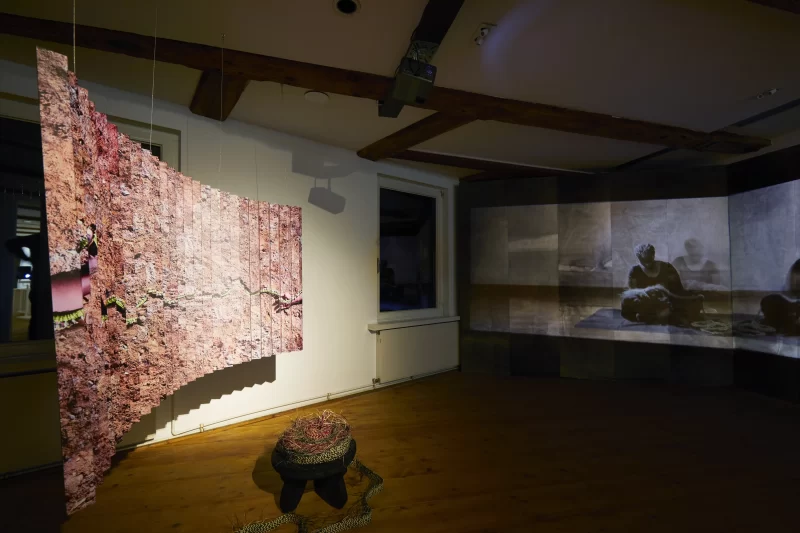
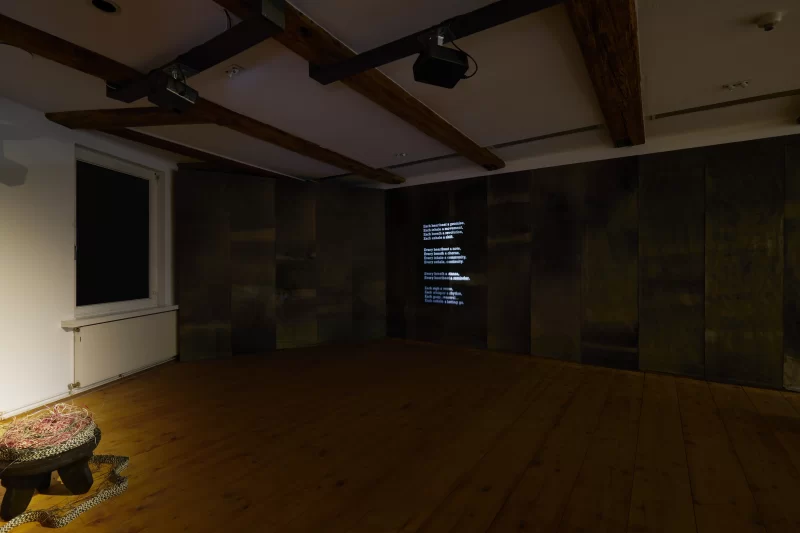
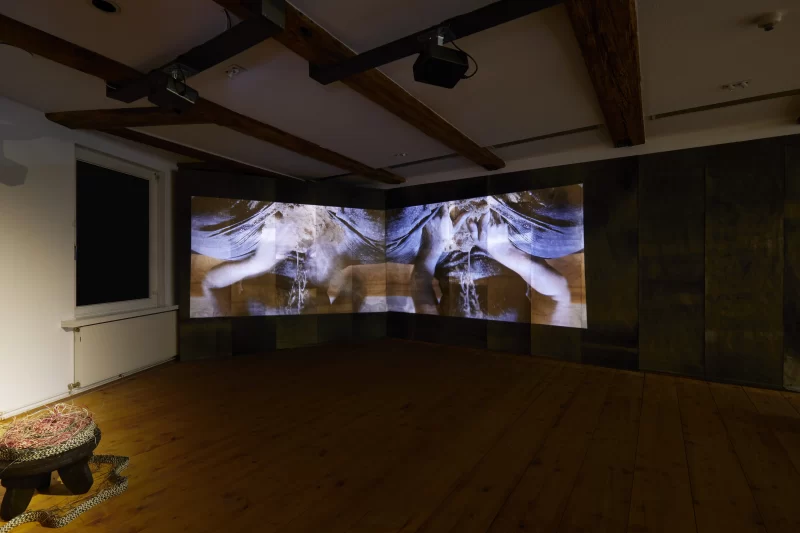
Interspersed with the image of the marigold is a two-channel video installation, also projected on soot paper, in which figures sit cross-legged, weaving plucked marigolds into a chain. The mirrored projections play in alternation—when one moves, the other stills—a choreography of reciprocity, a practice passed between bodies and lifetimes. The choice of soot paper as a repeating motif is integral to this work. A material I have developed in collaboration with matriarchs in my family, it is created by suspending paper in the kitchens of Bibi Mkunde Aroni Mcharo and other women elders, allowing layers of soot to accumulate over time. This practice is not merely about material transformation but about writing with and through them—without translation, without the burden of making their voices legible within academic or artistic frameworks. The soot, an index of fire and sustenance, carries the weight of time spent together, of shared breath, of stories that settle without the need for inscription.
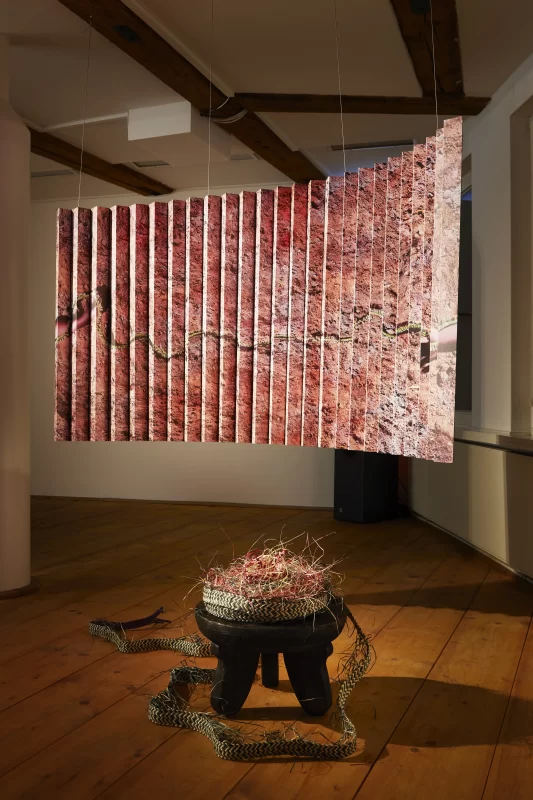
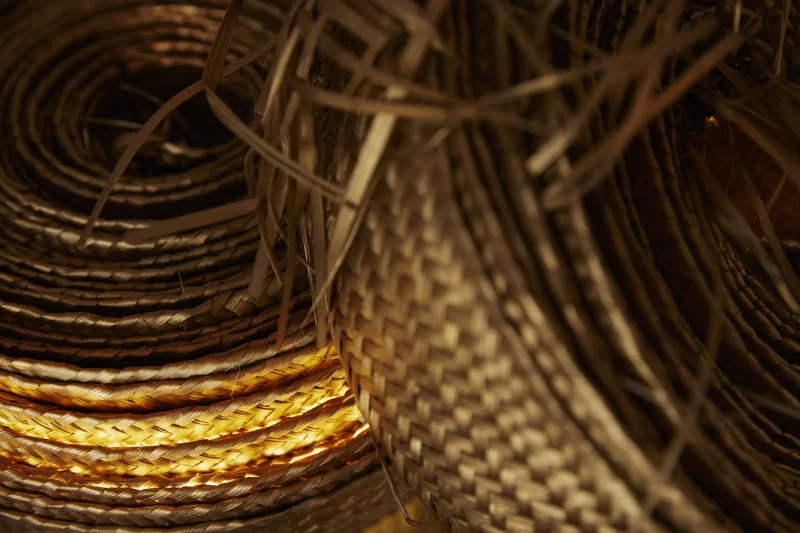
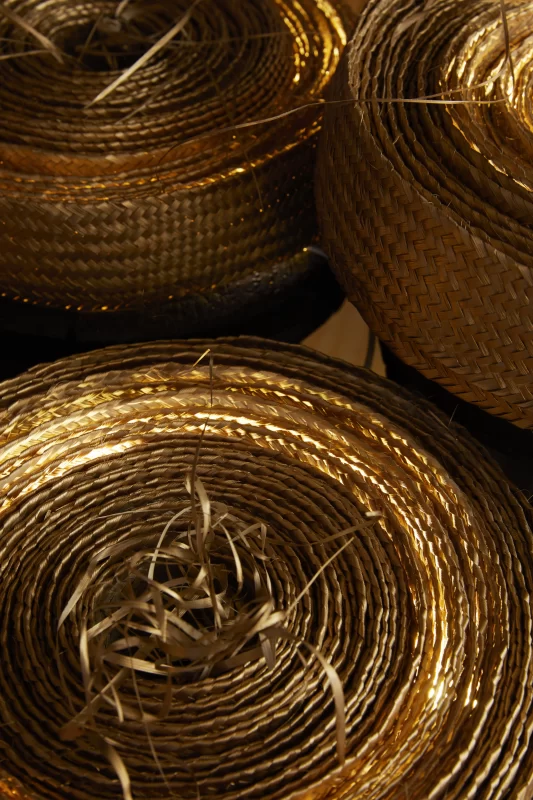
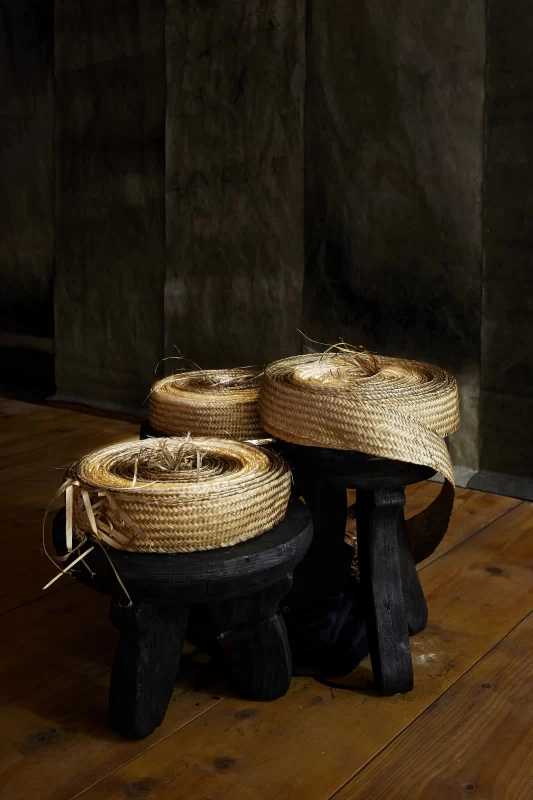
Further into the exhibition, the floral accessory captured in the two-channel video reappears in a pleated photographic work, its undulating form inviting the viewer to follow its path—not across a flat surface, but through folds, creases, and disruptions. These gestures are ways of tending to relation, of inscribing memory through practice rather than text. And, scattered across the installation space are woven ukili objects, their open weave mirroring the porous nature of history—not as a closed narrative, but as one that breathes, shifting and finding new meaning through relation. The weaving itself functions as a temporal and relational act, binding generations together through the repetition of gestures that refuse finality. Embedded within them is a light that pulses in sequences of breath and heartbeat. These objects are not frozen in time; instead, they remain animated, alive through generational hands that continue to weave them into the present. They extend history beyond the rigidity of institutional archiving, refusing enclosure and instead embracing fluidity, transformation, and continued inscription through care and communal touch.
Where the Ashes Rest, a Single Marigold Bloomed (2025) inhabits the space between rupture and repair, between capture and the uncontainable. It enacts care, questioning how we cultivate and nurture memory, how we ensure its survival beyond what is easily seen or spoken. It is an offering to the stories that persist in the spaces we cannot fully see, in the breath between words, in the hands that continue to weave.
An Installation featuring video, sound, image, soot, olfactory elements, weaved and wooden objects, lights.
2025